
The Opportunity Cost of Treating Your Workplace Move as "Just a Move"
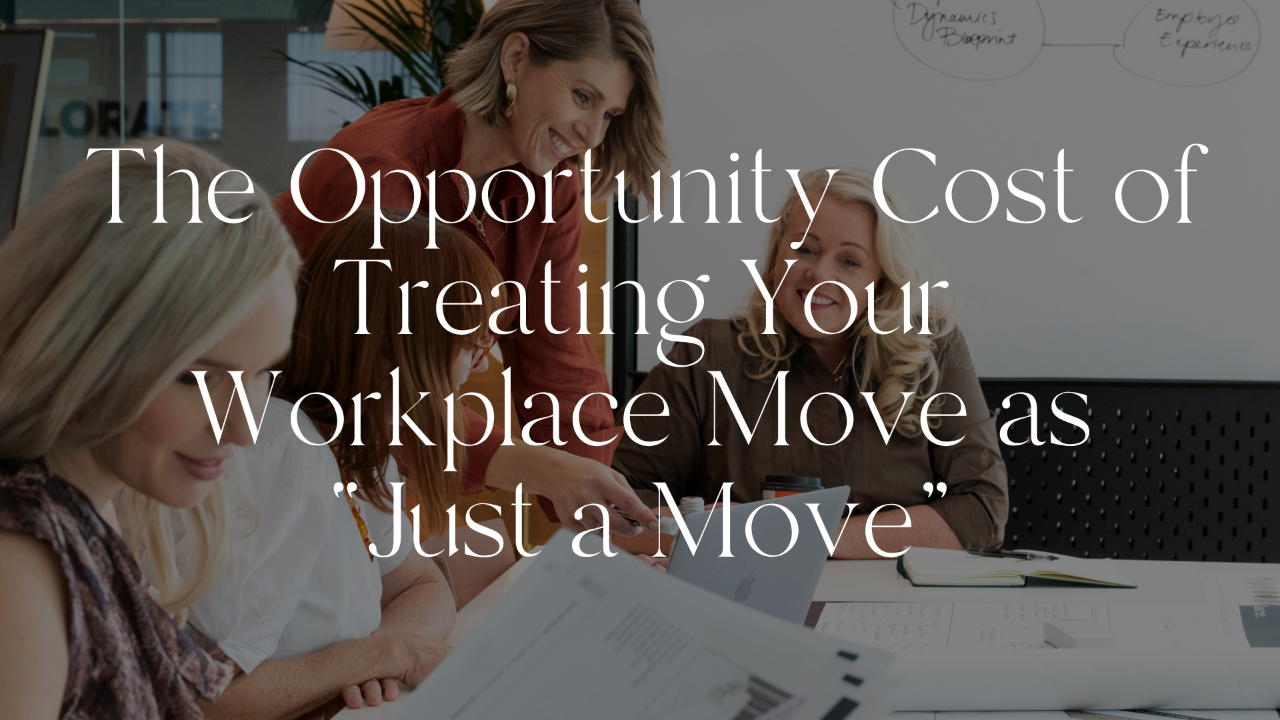
Last week we ran a change workshop with our client to support the move to their new workplace.
On paper, it could be considered a "simple" relocation. They're already hybrid, working in an unallocated seating model - no real new ways of working, in theory. New building not too far from the current, minimal commute disruption for most. Multiple floors consolidating down to one, with more space and better amenity. All good things, in the big picture.
But an hour into the workshop, it was clear how much there actually was to communicate, and how differently people needed to hear it.
Changes in workpoint quantities, workpoint styles, meeting rooms, collaboration space and quiet rooms all meant that even though these spaces already existed in some form, the ratios were different in the new environment. Different ratios mean new ways of working, whether anyone had framed it that way or not.
The people who are primarily desk-based five days a week have completely different questions a...
Find Your Anarchist – and turn them into your BIGGEST advocate
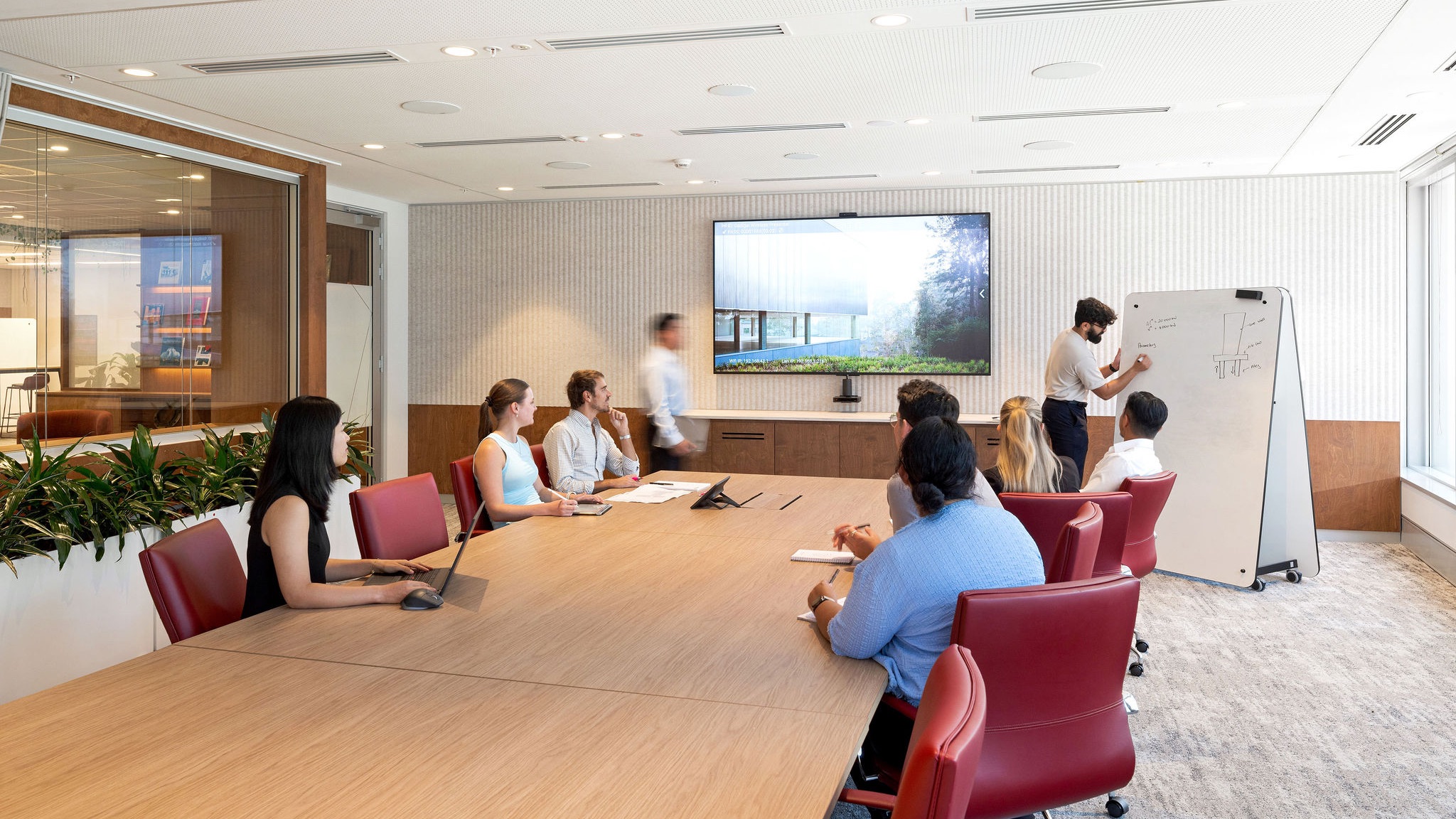
There's usually a moment in every workplace project where someone leans over and whispers, "I'm so sorry about Sally. She's just... difficult. We can work around her if we need to."
It always gives me a little giggle, but I say: "Sally is exactly who I've been looking for."
In every project, I'm actively searching for the anarchist - the person who's going to object, who's uncomfortable, who's pushing back at every turn. Because what most people miss is that they're not trying to derail your project. They're your canary in the coal mine, showing you exactly where you need to think differently push harder, dig deeper to create a design that genuinely works for everyone, not just the easy-to-please majority.
The challenge: Turn resistance into advocacy
It's become my personal mission: find the anarchist and turn them into an advocate.
When we do our job right [when we actually listen to what they're saying underneath the resistance], when we push ourselves as a design team to solve...
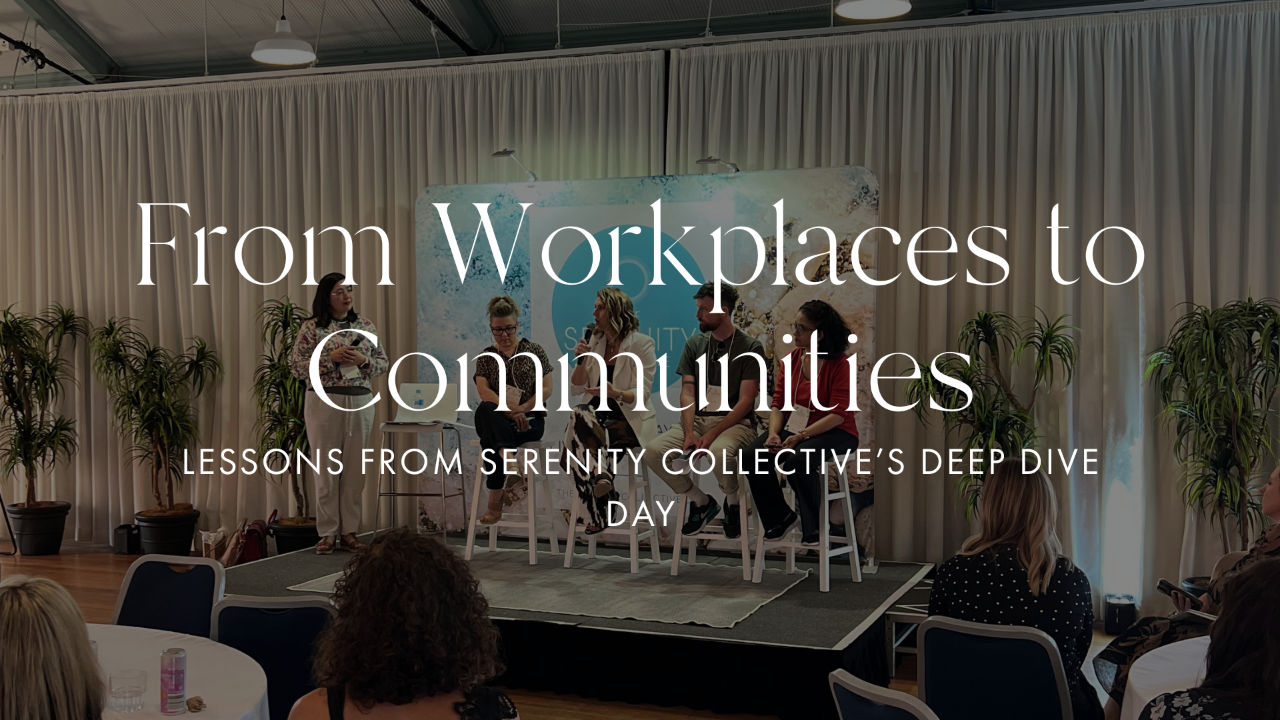
From Workplaces to Communities: Lessons from Serenity Collective’s Deep Dive Day
I often ask myself a simple question when I start working with a new client: what will bring this workplace to life? It goes without saying that it should be functional and efficient, so how do we then make it feel truly alive?
The answer has become clear over time: it's people feeling connected, a sense of belonging and like they are part of something bigger than themselves. That’s what drives us. Guiding organisations to transform their workplaces into communities where purpose is at the heart of everything.
Last week, I had the privilege of exploring community with a group of heart-led leaders at the Serenity Collective Deep Dive Day. Walking into the room, you could feel the energy of curiosity and openness. People were ready to pause, reflect, and challenge the ways they had been thinking about culture, connection, and the spaces they inhabit.
We started by acknowledging a reality that has been quietly reshaping the modern workplace:
Our workplaces are no longer just...
Change is a Nervous System Event
Why workplace change feels harder than it should, and what we often miss about it.
If you’ve ever led change at work, maybe you moved offices, rolled out hybrid working, shifted systems or team structures, you’ve probably run into something unexpected.
Even when the change makes sense…
Even when it’s been well-communicated…
Even when it’s genuinely better than the old way…
It can still feel like pulling teeth to get everyone on board.
There’s resistance. Frustration. That awkward silence in meetings where you thought there’d be momentum. Little signs of disengagement that you can’t quite put your finger on, but you feel them.
And it can leave you wondering: Why is this so hard? Why aren’t they embracing this?
Here’s what I want you to know, something most change strategies completely overlook:
Change isn’t just a checklist or a rollout plan.
It’s a nervous system event.
Even positive change, when it’s smart, strategic, progressive, still creates uncertainty. And our brains? ...
Should we stay or should we go?
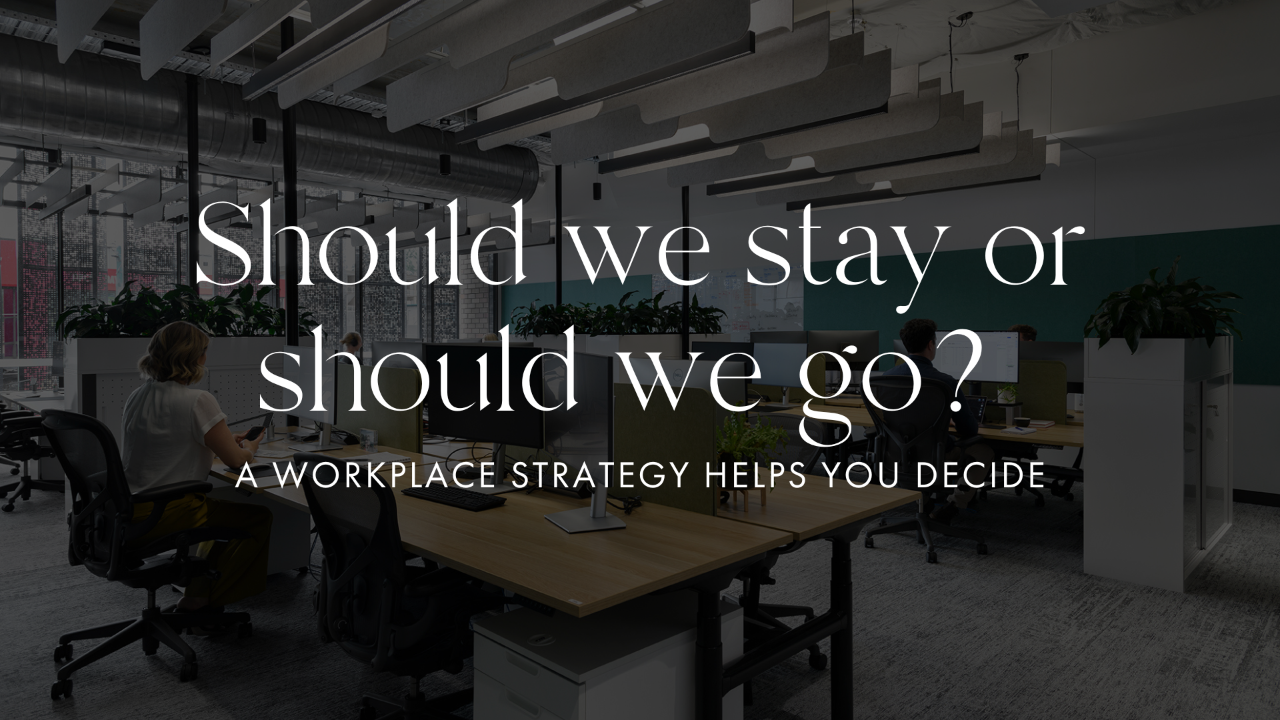
A workplace strategy helps you decide
Just like the classic Clash punk rock anthem from the ‘80s, this question still hits hard — especially when it comes to your workplace!
The pain of indecision is real, and for many organisations it’s a looming end of a lease that brings them the all-too-familiar dilemma: Should we stay, or should we go?
It’s a decision that feels even more complex when you’ve already poured significant funds into your current office — fit-outs, furniture, technology upgrades, signage and branding. Understandably, the instinct is to stay put and protect the sunk cost. But what if the space no longer serves your people, your operations, or your strategy?
At COMUNiTI we often hear: “We’ve spent so much on this space — wouldn’t investing in a workplace strategy just be wasted if we end up staying?”
The answer is no!
Here’s why:
A workplace strategy isn’t about the building — it’s about your business
Workplace strategy isn’t just about moving or redesigning of...
The Most Overlooked Opportunity For Cultural Change
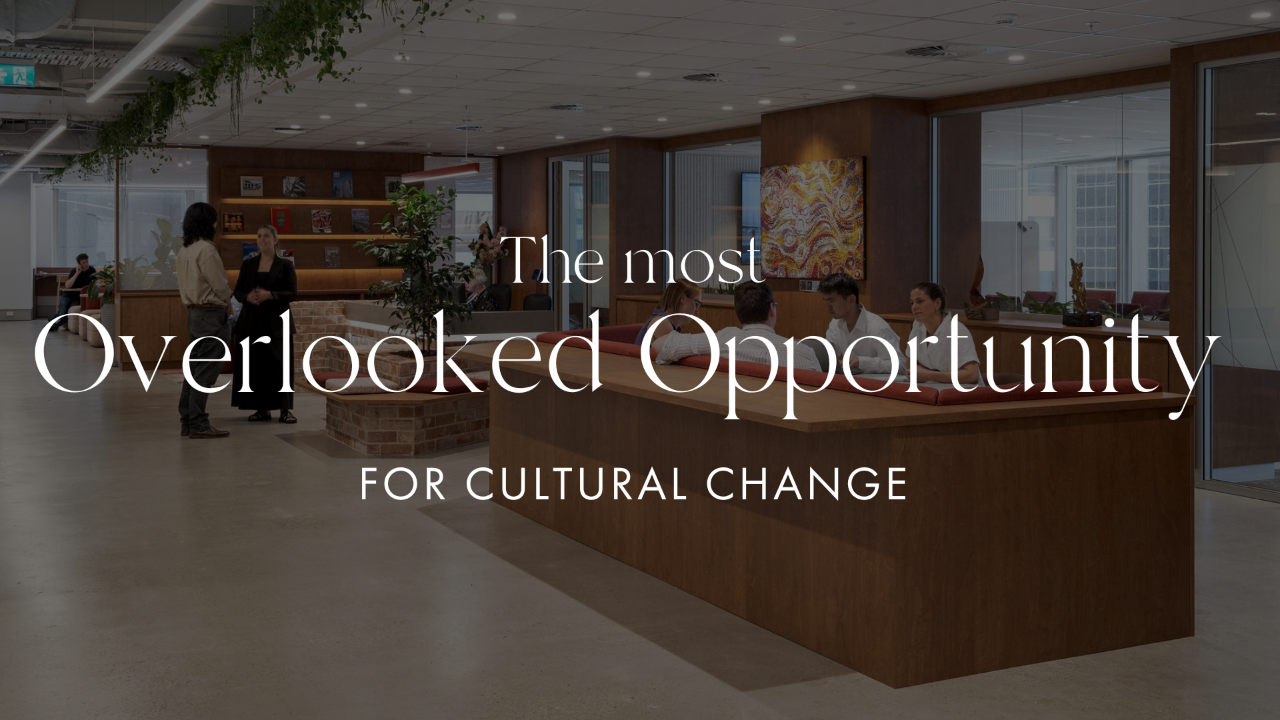
There’s a moment in every business lifecycle that offers rare, transformational potential. It usually doesn’t arrive with fanfare.
In fact, it often shows up in the form of a lease expiry.
At first glance, it looks logistical — a decision about how much space, the right location, how much is it going to cost, and the style and furniture. But if you pause long enough, you’ll see it’s something far more powerful: a once-in-a-decade opportunity to reset your culture, reconnect with your purpose, and reimagine the way your people work together.
The workplace isn’t just where work gets done.
It’s where your values are felt.
Where leadership is either embodied or eroded.
Where culture becomes a lived experience — or falls flat against glass partitions.
The Opportunity Beneath the Surface
Too often, workplace transitions are treated as operational checklists. A project manager is appointed. A budget is approved. A space is found.
But what gets missed is the conversation about...
The Future of Work is a partnership of People, Culture & Place

A new approach to workplaces
For decades, organisations have viewed the functions of People & Culture and Property as separate entities.
The former focused on workforce engagement, talent strategies, and leadership development, while the latter managed physical workspaces as financial assets, often sitting under Finance or Operations.
But what if the future of work calls for a fundamental shift — one where workplaces are no longer just ‘assets’ to optimise, but strategic tools designed to enhance human potential?
At LEGO, they’ve already embraced this shift. Their workplace function now reports into their Chief People Officer, rather than Operations or Finance. Why? Because as workplace leaders at LEGO explain, when you see real estate as an asset, you focus on optimising the space itself. But under People & Culture, the goal shifts from optimising an asset based on cost and efficiency, to maximising people’s performance potential.
This subtle change is reframing how organisa...
Your Workplace is a Cultural Canvas

Bringing your business story and aspirational culture to life
Your workplace isn’t just a physical space; it’s a cultural canvas.
It’s where your organisation’s vision, values, and purpose come to life — connecting employees and clients in a meaningful way.
When you think of iconic brands like Apple, their products are just one part of the story. Their sleek, welcoming stores and thoughtfully designed workplaces are integral to the holistic experience they deliver. These intentional workspaces reflect the sentiment of their vision, and purpose: simplicity, innovation, and creativity.
For organisations that want to embody their purpose in every interaction, the takeaway is clear: a space designed with strategic intent becomes a powerful tool for telling your brand story and cultivating aspirational culture.
Why a Workplace Strategy matters for CEOs and People & Culture Managers
A well-executed workplace strategy can transform your office into a space that actively communicates...
Is a Workplace Strategy worth the investment?

It’s not just about what you save, it’s about what you gain
*Spoiler alert* It will come as no surprise that this article concludes that absolutely yes, a Workplace Strategy is worth the investment — Workplace Strategies are core to what we do at COMUNiTI. But what might surprise you is the returns that the right Workplace Strategy can deliver, beyond savings per m2.
You see, not all Workplace Strategies are created equal.
There are Workplace Strategies that just give you a design brief, and this might help you improve the aesthetics of your workplace and save some square meterage costs. ✅
And then there are Workplace Strategies that unlock a much bigger return on your investment. These Workplace Strategies are data-driven and strategically tailored to your organisation’s vision, goals, values, unique brand story, aspirational culture, and operational needs. ✅✅✅
They are developed by Workplace Strategists who know how to form a much deeper understanding of your business and ...
What is the role of a Workplace Strategist?

What is the role of a workplace strategist?
A guide for People & Culture leaders
The role of a Workplace Strategist has gained a lot of attention post-pandemic as businesses focus on attracting and retaining talent and enticing people back into the office.
But what exactly does a Workplace Strategist do, and how can we help People & Culture leaders drive employee engagement?
💫 What we do
Workplace Strategists leverage design thinking principles with an analytical business mindset.
We create a strategic framework that captures the complex essence of your business — your unique operational structure, how it functions, how employees interact, and how your office space can support these dynamics.
Rather than jumping straight into the planning phase and putting desks and offices onto a floor plan, a Workplace Strategist knows how to transcend aesthetics and deliver a workspace that aligns with your company’s mission, values, and goals, while elevating the employee experience a...
